Choosing Hiking Trouser Fabrics
A practical step-by-step guide to choosing hiking trouser fabrics, including preparation, instructions, common issues, tips, and next steps.
Choosing Hiking Trouser Fabrics
Choosing the right fabric for hiking trousers is a practical decision that affects comfort, safety, and how long your clothing lasts on the trail. The best choice depends on weather, terrain, effort level, and how much you sweat. This guide explains the main fabric families, how to compare them in a shop, and how to match a fabric to the conditions you actually expect to meet.
Fast Answer
- For most three-season day hikes, pick a stretchy woven fabric that moves moisture, dries quickly, and resists abrasion.
- In cold, wet, or windy conditions, choose a tighter weave with some wind resistance and plan a separate waterproof layer over it.
Before You Start
- Write down the typical weather, temperature range, and trail type for your planned hikes so you can judge fabrics against real conditions.
- Check the care label of any trousers you already own to learn which fabric blends have worked for you and which have failed.
- Decide your priority order before shopping: breathability, drying speed, durability, warmth, or stretch, because no single fabric leads in all five.
- Bring or note a small water bottle, a tape measure, and a notebook, then test fabric samples with a few drops of water if the shop allows it.
Step-by-Step Instructions
Learn the main fabric families
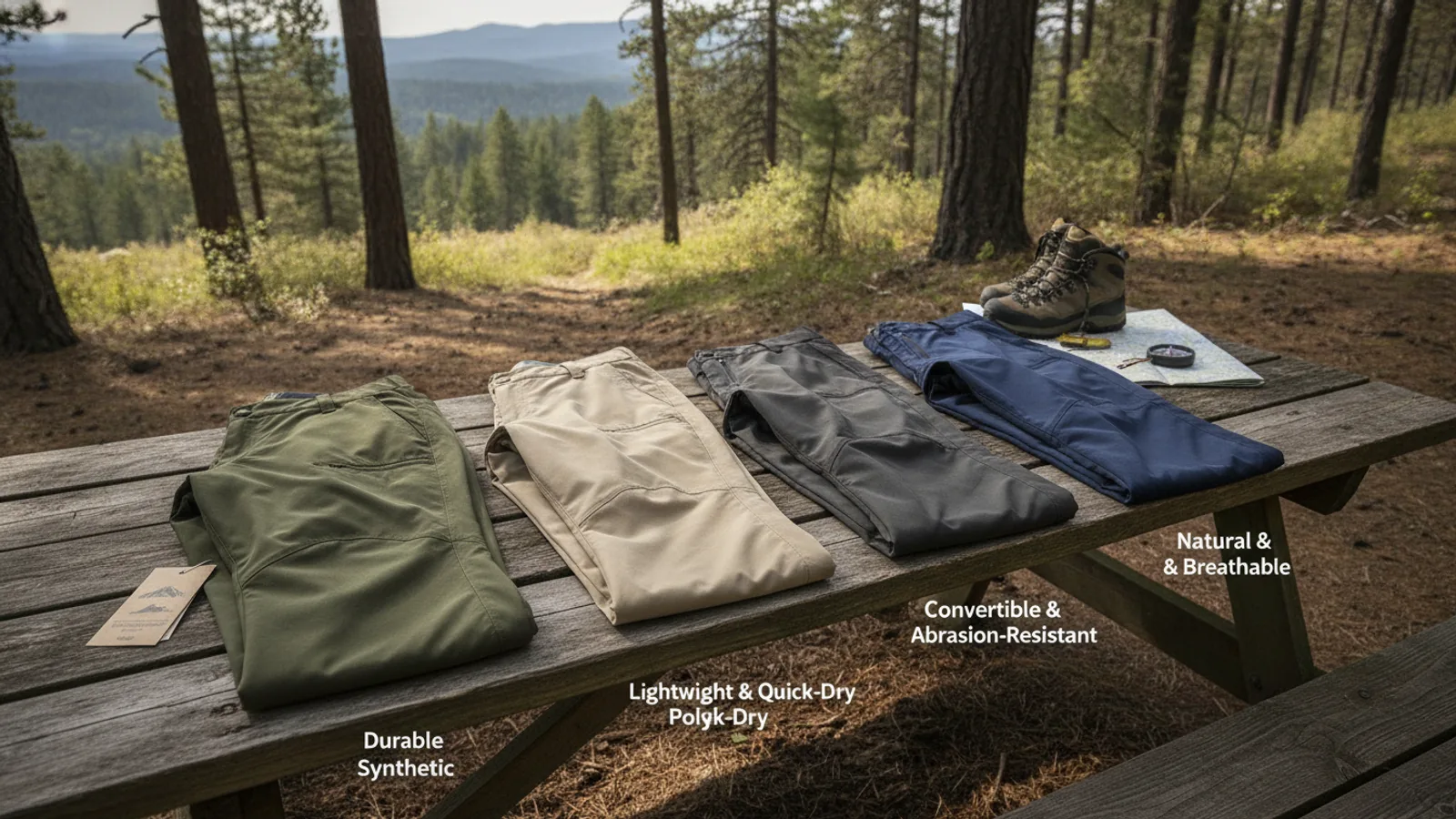
Start by learning four broad fabric families. First, synthetic wovens such as nylon and polyester: they are strong, dry fast, and handle abrasion well, which makes them a common choice for hiking trousers. Second, softshell fabrics: these are usually stretchy wovens with a tight weave that blocks some wind and light rain while still letting sweat escape. Third, natural fibres such as cotton and wool: cotton feels pleasant in dry heat but holds water and dries slowly, while wool stays warm when damp and resists odour. Fourth, blends: mixing fibres can combine stretch, durability, and drying speed, though the exact mix matters more than the label. As a practical check, read the fibre percentages on the care label and note the order, because the first fibre listed is usually the largest share. This matters because the label tells you what the cloth is likely to do when wet and how much care it will need.
Match fabric to your expected weather
Weather decides more than brand or style. In hot, dry conditions, choose a light, tightly woven synthetic with high breathability and quick drying, and avoid heavy cotton because sweat and water will make it cling and cool you down. In cool, windy conditions, a softshell with a denser weave gives useful wind resistance and light rain protection while keeping some breathability. In steady rain, no trouser fabric stays dry on its own, so pick a fast-drying material and carry a waterproof over-trouser layer instead of relying on the fabric itself. In cold, dry conditions, a slightly thicker woven with a brushed inner face adds warmth without much weight. As a practical check, hold the fabric up to a light and look through it: a tighter weave blocks more wind but also traps more heat. This matters because wind and rain steal warmth far faster than still air, so matching the weave to the forecast keeps you safer and more comfortable.
Test breathability and drying speed
Breathability and drying speed are the two properties you will notice most on a long climb. To judge breathability, breathe gently through a single layer of the fabric held close to your mouth: if air passes easily, moisture vapour can escape more readily. To judge drying speed, place a few drops of water on the cloth and watch how the dark patch fades, or wet a corner and time how long it takes to feel dry to the touch. Synthetic wovens and softshells usually dry faster than cotton, and thin fabrics dry faster than thick ones. As a practical check, wet one palm-sized sample and one alternative, then compare them side by side after a few minutes. This matters because damp trousers pull heat from your legs, and a fabric that dries quickly limits how long you stay cold after rain, sweat, or a stream crossing.
Check stretch, fit, and freedom of movement
Hiking involves stepping over rocks, bending, and lifting knees higher than on a pavement walk. Stretch helps, but the cut matters just as much. Look for a woven fabric with a small amount of elastane or a mechanical stretch weave, then test it by doing a deep lunge and a high step in the fitting area. Check that the fabric pulls across the thigh or seat, that the waistband stays in place, and that seams do not dig in when you bend. A gusseted crotch, where an extra panel of fabric joins the legs, adds useful freedom without extra weight. As a practical check, crouch down fully and stand up again, then note any tightness or restriction. This matters because a fabric that feels fine while standing can still limit your stride on rough ground, which raises the risk of a slip or a fall when you need steady footing.
Assess durability and abrasion resistance
Durability decides how long the fabric survives brush, rock, and repeated washing. Feel the cloth between your fingers and compare its weight and tightness with lighter and heavier options. A denser weave with a higher denier, meaning a thicker yarn, usually resists abrasion better, but it also weighs more and may breathe less. Check high-wear zones such as the seat, knees, and inner thighs for reinforced panels or double-layer fabric. Run a fingernail gently across the surface to see whether fibres snag easily, and look at the stitching and seam type, because a strong fabric still fails at a weak seam. As a practical check, inspect the knee and seat areas for reinforcements and tug a seam gently to see how it responds. This matters because a hole in the seat or knee can end a trip or force a repair, and reinforced zones are far easier to choose in a shop than to fix on a trail.
Decide based on care, weight, and layering
Finally, weigh care needs, packed weight, and how the trousers layer with the rest of your clothing. Fabrics that dry fast and resist odour usually need less washing and dry overnight, which suits multi-day trips. Thicker softshells may need gentler washing and take longer to dry. Check the care label for temperature limits and any warnings about fabric softener, then follow the maker's instructions rather than a general rule. Consider packed weight if you carry a spare pair, and check that the trousers fit comfortably under or over your waterproof layer without bunching. As a practical check, roll the trousers into a tight bundle, weigh or compare the bundle by feel, and try them on with your rain layer to confirm the fit. This matters because a fabric that is hard to dry or awkward to layer can leave you cold and wet even when its trail performance looks good on paper.
Quick Reference
| Situation | Action | Why it helps |
|---|---|---|
| Hot, dry summer hiking with long climbs and heavy sweating. | Choose a light, tightly woven synthetic fabric with high breathability and quick drying, and avoid heavy cotton blends that hold moisture against the skin. | Light synthetic wovens move sweat vapour away and dry fast, which helps you stay cooler and avoids the chill that damp cotton causes when you stop moving. |
| Cool, windy ridge walking with a chance of light showers. | Pick a stretchy softshell with a denser weave for wind resistance, and pack a separate waterproof over-trouser layer for steadier rain. | A denser weave blocks wind and light rain while still letting some sweat escape, and the separate shell handles heavy rain that no trouser fabric can repel alone. |
| Multi-day trips where laundry is limited and gear must dry overnight. | Favour fast-drying synthetic fabrics that resist odour, and check the care label so you wash them at the correct temperature without softener. | Quick-drying, odour-resistant cloth can be rinsed and worn again the next day, which keeps your pack lighter and reduces the risk of damp, cold legs. |
Common Issues
- Trousers feel clammy and cold during a rest stop.: Switch to a fabric that moves moisture and dries quickly, such as a light synthetic woven, and add a breathable base layer that wicks sweat away from the skin. Change out of damp clothing at rest stops and keep a dry layer in your pack for long breaks.
- Fabric tears or wears through at the knees and seat.: Look for a denser weave or reinforced panels in high-wear zones, and size the trousers so the fabric is not stretched tight across the knee or seat when you bend. Repair small holes early with a patch or stitch to stop them spreading on later trips.
- Trousers feel stiff and restrict high steps on rough ground.: Choose a fabric with some stretch, such as a woven blend containing elastane, or a mechanical stretch weave, and confirm the cut allows a full lunge. Check for a gusseted crotch and test the fit with the footwear and socks you actually hike in.
Advanced Tips
- Compare fabric weight by feel and by the care label, then match it to your season: lighter cloth for warm months, denser weaves for cold wind and brush.
- Carry a small repair kit with a patch, needle, and strong thread so a snag in a thin fabric does not end the trip.
- Wash technical fabrics with a gentle detergent and no softener, then air dry, because softener can coat fibres and reduce how well they move moisture.
Final Checklist
- Confirm the fibre blend from the care label and check that it matches your main weather and terrain.
- Test stretch, fit, and a deep lunge in the fitting area with your hiking footwear on.
- Inspect knees, seat, and seams for reinforcement and signs of weak stitching.
- Try the trousers with your full layering system, including base layer and waterproof shell, before you rely on them outdoors.
FAQ
Is cotton ever suitable for hiking trousers?
Cotton can feel comfortable in dry, warm conditions, but it holds water and dries slowly, so it cools you down when damp. For anything beyond a short walk in reliable dry weather, choose a synthetic or wool blend that moves moisture and dries faster, and keep cotton for camp or casual use instead.
How can I tell whether a fabric will breathe well?
Hold a single layer close to your mouth and breathe gently through it. If air passes easily, moisture vapour can escape more readily, which usually means better breathability. Compare two or three samples the same way, and remember that a tighter, heavier weave will block more wind but also trap more heat.
Do I need stretch in hiking trousers?
Stretch helps with high steps, scrambles, and deep bends, but the cut matters just as much. A gusseted crotch and a generous thigh can give freedom without elastane. Test any pair with a full lunge and a high step before deciding, and choose stretch mainly if your routes involve rough ground or big moves.